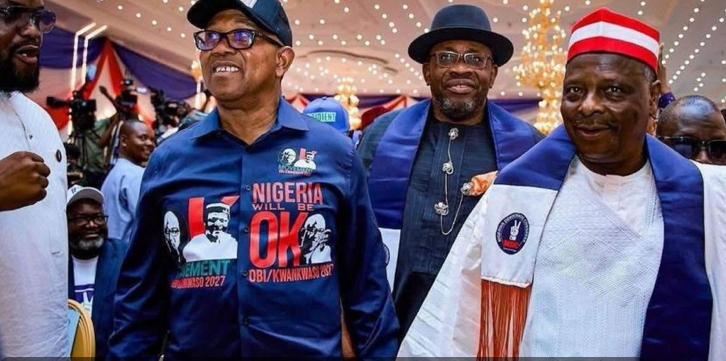
NDC Stirs Controversy by Exempting Obi and Kwankwaso from Anti-Defection Oath
The Nigeria Democratic Congress (NDC) has sparked a heated internal debate after exempting its presidential candidate, Peter Obi, and his running mate, Rabiu Musa Kwankwaso, from signing the party’s mandatory anti-defection oath. While the party has made this commitment a non-negotiable requirement for all other candidates seeking legislative and governorship positions, the decision to grant an exemption to the presidential ticket has raised questions regarding transparency and internal equity.
The anti-defection policy—which requires candidates to sign indemnity forms and sworn affidavits pledging loyalty to the party—was introduced by the NDC leadership as a strategic move to curb the frequent party-switching that has plagued Nigeria’s political landscape. By formalizing these commitments, the party aims to enforce discipline and project a more stable and unified front heading into the 2027 general elections.
However, the preferential treatment of the party’s flagbearers has invited criticism from party members and political observers. Critics argue that a policy intended to solidify institutional loyalty should be applied uniformly to every candidate, regardless of their status or national profile. They contend that exempting high-level candidates undermines the party’s stated goal of promoting equality and institutional accountability.
As the NDC prepares for the upcoming electoral cycle, this development highlights the tension between the party’s pragmatic need to accommodate major political figures like Obi and Kwankwaso and its commitment to internal discipline. It remains to be seen whether this decision will lead to further friction within the party or if leadership will provide a clearer justification for the disparate treatment of its candidates.