₦70,000 wage inadequate for workers — Keyamo
Also addressing the summit, Nigeria Labour Congress (NLC) President, Comrade Joe Ajaero, urged the government to use windfall oil revenues from international price spikes to cushion rising fuel and living costs. Pointing to oil prices hitting $100 per barrel due to the Strait of Hormuz crisis, Ajaero questioned, “As one of the oil-producing countries, they are making trillions because of the problem in the Strait of Hormuz. You can see that oil was pegged at maybe $70 or whatever dollars. It’s $100, so they are making an extra $30 or $40. Now, can’t you use this money to embark on some interventionary measures like other countries where this is affected, so that we’ll now be alive till the time when they will say minimum wage?”
Ajaero stressed that wage discussions must center on actual purchasing power rather than nominal amounts, citing hyperinflation scenarios where higher pay loses real value. “Assuming one naira is equal to $1, I would advise Nigerian workers to remain at ₦70,000 because that would be big money for them, but you can see that you can equally get one million naira and a bag of rice is ₦500,000, so what of that? What happens?” he observed. Pointing out that “Negotiations are not just figures,” he advocated tying wages and pensions directly to inflation through automatic indexation mechanisms to protect incomes.
Looking ahead to the upcoming three-year review cycle, Ajaero noted that negotiations need to begin ahead of the March–April timeline while questioning the execution of relief initiatives like the Compressed Natural Gas (CNG) conversion policy. “This minimum wage is supposed to expire March–April, so the conversation ought to start early. That’s a three-year cycle,” he explained, adding, “But now we are more concerned on ‘give us this day’ — how to survive today before that time. Because these policies of the fuel going up, jumping up, and the Nigerian government is making a whole lot of money from it.” He asked, “Are we even producing enough in terms of food, reliance on food? Now, between that time and now, the most troublesome problem for a worker, which happened to be transportation — the CNG policy, did it work? Where and where can you refill your tank? How many vehicles have been converted to CNG? How many electric vehicles are on the road?”
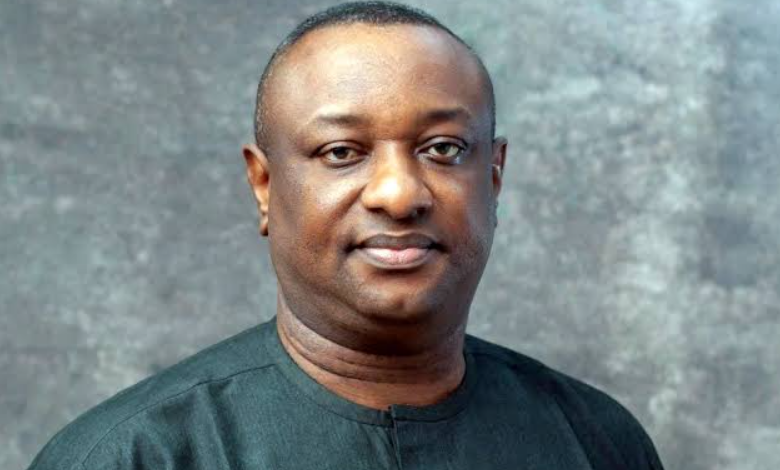
Minister of Aviation and Aerospace Development, Festus Keyamo, SAN, has stated that the N70,000 national minimum wage is inadequate to withstand current economic pressures on Nigerian workers. Speaking at the 2026 National Pre-Retirement Summit organized by XEM Consultants Limited, Keyamo urged the Federal Government to compromise with organized labour’s N500,000 demand while criticizing agencies that deny workers basic allowances. “I will have none of it. Without these workers, we will not have a country,” he said, emphasizing that “It’s not the machines or everything that you [have]; it’s the human factor. Without that, no machine will move.”
Also addressing the summit, Nigeria Labour Congress (NLC) President, Comrade Joe Ajaero, urged the government to use windfall oil revenues from international price spikes to cushion rising fuel and living costs. Pointing to oil prices hitting $100 per barrel due to the Strait of Hormuz crisis, Ajaero questioned, “As one of the oil-producing countries, they are making trillions because of the problem in the Strait of Hormuz. You can see that oil was pegged at maybe $70 or whatever dollars. It’s $100, so they are making an extra $30 or $40. Now, can’t you use this money to embark on some interventionary measures like other countries where this is affected, so that we’ll now be alive till the time when they will say minimum wage?”
Ajaero stressed that wage discussions must center on actual purchasing power rather than nominal amounts, citing hyperinflation scenarios where higher pay loses real value. “Assuming one naira is equal to $1, I would advise Nigerian workers to remain at ₦70,000 because that would be big money for them, but you can see that you can equally get one million naira and a bag of rice is ₦500,000, so what of that? What happens?” he observed. Pointing out that “Negotiations are not just figures,” he advocated tying wages and pensions directly to inflation through automatic indexation mechanisms to protect incomes.
Looking ahead to the upcoming three-year review cycle, Ajaero noted that negotiations need to begin ahead of the March–April timeline while questioning the execution of relief initiatives like the Compressed Natural Gas (CNG) conversion policy. “This minimum wage is supposed to expire March–April, so the conversation ought to start early. That’s a three-year cycle,” he explained, adding, “But now we are more concerned on ‘give us this day’ — how to survive today before that time. Because these policies of the fuel going up, jumping up, and the Nigerian government is making a whole lot of money from it.” He asked, “Are we even producing enough in terms of food, reliance on food? Now, between that time and now, the most troublesome problem for a worker, which happened to be transportation — the CNG policy, did it work? Where and where can you refill your tank? How many vehicles have been converted to CNG? How many electric vehicles are on the road?”