
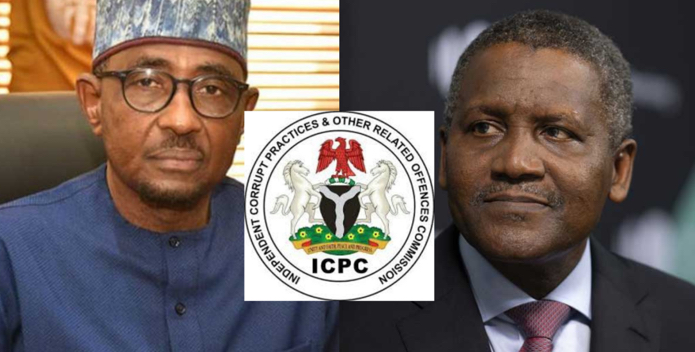
ICPC Rejects Petition Withdrawal, Continues Probe Of Dangote’s Allegations Against Ex-NMDPRA Chief, Ahmed
The Independent Corrupt Practices and Other Related Offences Commission (ICPC) has declared that it will continue investigating a corruption petition filed by Africa’s richest person, Alhaji Aliko Dangote, against Engineer Farouk Ahmed. Despite the withdrawal of the petition by the billionaire, the anti-graft agency insists that its probe into the immediate past Authority Chief Executive of the NMDPRA will proceed. The commission confirmed receiving a formal “Notice of Withdrawal of Petition Against Engineer Farouk Ahmed” from Dangote’s legal team earlier this week.
The legal representatives for Dangote informed the commission that the petition, originally filed on December 16, 2025, was being retracted in its entirety. They explained that this decision was reached because another law enforcement agency had reportedly taken over the investigation into the allegations. However, the ICPC maintains that the withdrawal does not automatically terminate a case once a formal inquiry into potential public interest violations has already begun.
In a firm response issued by its spokesperson, the anti-corruption agency clarified that the process cannot be terminated at the discretion of the petitioner. The commission noted that because the allegations involve “issues of public interest and alleged abuse of office,” they have a statutory mandate to see the investigation through to its conclusion. The ICPC emphasized that their work is conducted for the benefit of the Nigerian state and its people, regardless of the petitioner’s current stance.
The original allegations filed by Dangote sparked significant national outrage and placed the petroleum sector regulator under intense scrutiny. Central to the claims was the accusation that Farouk had engaged in corruption and the misappropriation of public funds. Specifically, Dangote questioned how a public official could afford to spend approximately $5 million on the education of his four children in Switzerland without a verifiable lawful income to justify such luxury.
Before the formal filing, Dangote had publicly criticized the former regulator during a media briefing, contrasting the alleged overseas spending with the economic hardships faced by ordinary Nigerians. He pointed to rising inflation and fuel price hikes as evidence of the disconnect between public officials and the citizens they serve. Following these public accusations and the subsequent petition, Farouk resigned from his position, and President Tinubu has since appointed a replacement.
The ICPC had already invited Dangote to appear before a special panel of investigators in Abuja late last month to provide more details on his claims. By citing specific sections of its enabling Act, the commission is signaling that it will prioritize “transparency, accountability and the fight against corruption” over the private interests of those involved in the initial filing. This suggests that the legal pressure on the former NMDPRA boss will not dissipate simply because the original accuser has stepped back.
As the investigation enters its next phase, the ICPC remains focused on the financial improprieties alleged to have occurred during Farouk’s tenure. The outcome of this probe is expected to have significant implications for the regulation of Nigeria’s downstream oil and gas sector. The commission’s refusal to halt the case underscores a growing institutional push to ensure that high-level corruption allegations are thoroughly vetted by the appropriate authorities.


