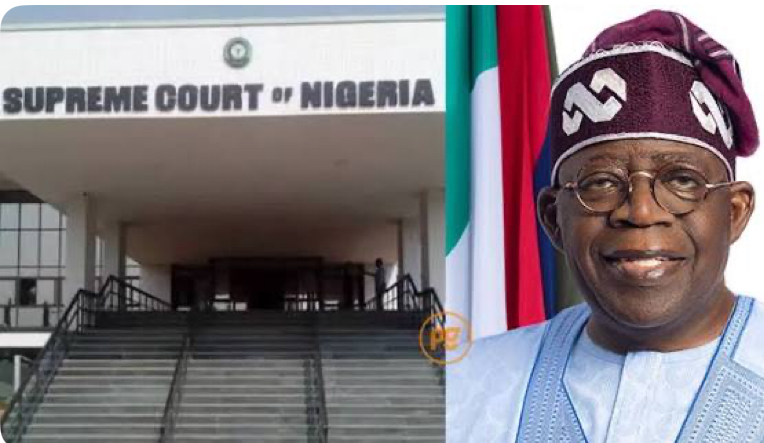
Supreme Court upholds President’s power to declare emergency rule, suspend elected officials
The Supreme Court of Nigeria has delivered a crucial ruling, affirming the President’s constitutional power to declare a state of emergency in any state to prevent the collapse of law and order or a descent into anarchy. In a six-to-one split decision, the apex court held that under the provisions of Section 305 of the Constitution, the President is empowered to deploy extraordinary measures to restore stability. This includes the ability to suspend elected state officials, such as governors and legislators, but with the critical caveat that such suspensions must be strictly temporary and for a limited duration. Justice Mohammed Idris, in the lead majority judgment, noted that the nonspecific nature of the “extraordinary measures” mentioned in Section 305 grants the President the necessary discretion to act effectively during a crisis.
This judgment was in response to a suit filed by Adamawa State and ten other states led by the Peoples Democratic Party (PDP), which challenged the legality of a state of emergency declared by President Bola Tinubu in Rivers State, an action that resulted in the suspension of elected state officials for six months. Despite the substantive ruling, Justice Idris first upheld preliminary objections raised by the defendants (the Attorney General of the Federation and the National Assembly). He concluded that the plaintiff states had failed to establish a valid cause of action capable of activating the Supreme Court’s original jurisdiction, leading him to strike out the suit before proceeding to dismiss the case on its constitutional merits.
A notable and strong dissent was registered by Justice Obande Ogbuinya, who held that the plaintiffs’ case should have succeeded in part. Justice Ogbuinya agreed that the President has the authority to declare a state of emergency, but vehemently disagreed with the majority view on the scope of that power. He argued that the President cannot use emergency powers as a tool to suspend democratically elected officials, including state governors, deputy governors, and members of the state parliament, asserting that such an action constitutes an overreach.
Ultimately, the Supreme Court’s ruling reinforces the President’s authority as the primary guarantor of national stability, confirming that emergency powers can extend to temporarily overriding state-level democratic structures when faced with potential chaos. However, the requirement for a limited duration of suspension serves as an essential constitutional check, aiming to prevent the prolonged erosion of democratic governance under the guise of an emergency. This ruling provides crucial clarification on the delicate balance between federal executive authority and state autonomy during periods of acute crisis.